Materials Science: Unit II(a): Electrical Properties of Materials
Expression for Electrical Conductivity of a Metal (Derivation)
Based on Drude and Lorentz classical free electron theory
When an electric field E is applied to an electron of charge 'e' in a metal rod, the electron moves in opposite direction to the applied field with a velocity vd (Fig. 2.5). This velocity is known as drift velocity.
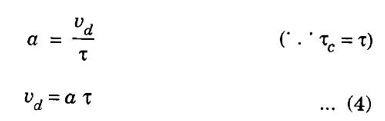
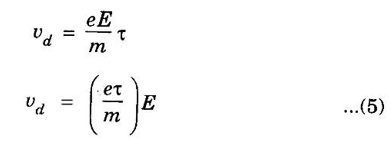
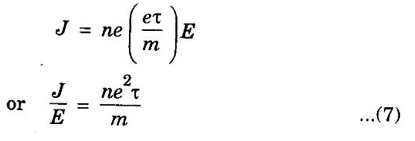
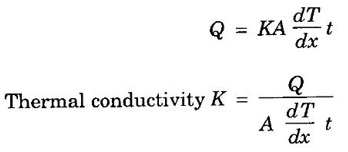
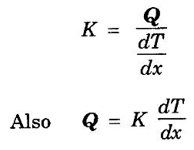
EXPRESSION FOR ELECTRICAL CONDUCTIVITY OF A METAL (Derivation) (Based on Drude and Lorentz classical free electron theory) When an electric field E is applied to an electron of charge 'e' in a metal rod, the electron moves in opposite direction to the applied field with a velocity vd (Fig. 2.5). This velocity is known as drift velocity. Force experienced by the electron F = e E ……(1) This force accelerates the electron and hence, it gains acceleration 'a', From, Newton's second law of motion, the force on the electron F = Mass of the electron (m) × acceleration (a) F = ma ...(2) From the eqns (1) and (2), we have ma = eE a = eE / m ...(3) From equation (3), it is found that the electron should be accelerated continuously due to the applied electric field. But, the accelerated electron collides with positive ion core and other free electrons. Hence it loses kinetic energy and velocity. Thus, after each collision, the velocity of electron increases until the next collision takes place. Average drift velocity of electron is = vd. If τc is collision time, then acceleration. Substituting the eqn (3) in (4) But, the current density in terms of drift velocity is given as J = nevd ...(6) Substituting eqn (5) in eqn (6), we have According to Ohm's law, current density (J) is expressed as On comparing the eqns (7) and (8), we have The eqn (9) represents electrical conductivity of the metal We know that the amount of heat conducted between the two ends of a metal rod. It is defined as the amount of heat conducted per unit time through the material having unit area of cross-section per unit temperature gradient. If area of cross section A is '1' m2. time of flow of heat t is 1 second, then Q - Amount of heat flowing per unit time through unit cross-sectional area. dt/dx - Temperature gradient.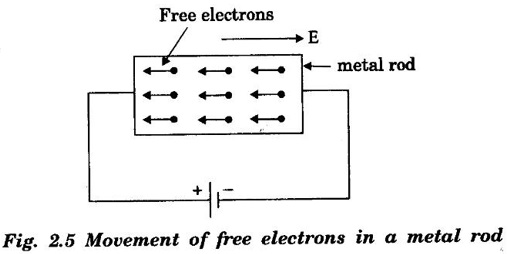


Thermal Conductivity (K)
Materials Science: Unit II(a): Electrical Properties of Materials : Tag: : Based on Drude and Lorentz classical free electron theory - Expression for Electrical Conductivity of a Metal (Derivation)
Materials Science: Unit II(a): Electrical Properties of Materials
Under Subject
Materials Science
PH3251 2nd semester Mechanical Dept | 2021 Regulation | 2nd Semester Mechanical Dept 2021 Regulation
Related Subjects
Professional English II
HS3251 2nd Semester 2021 Regulation | 2nd Semester Common to all Dept 2021 Regulation
Statistics and Numerical Methods
MA3251 2nd Semester 2021 Regulation M2 Engineering Mathematics 2 | 2nd Semester Common to all Dept 2021 Regulation
Engineering Graphics
GE3251 eg 2nd semester | 2021 Regulation | 2nd Semester Common to all Dept 2021 Regulation
Physics for Electrical Engineering
PH3202 2nd Semester 2021 Regulation | 2nd Semester EEE Dept 2021 Regulation
Basic Civil and Mechanical Engineering
BE3255 2nd Semester 2021 Regulation | 2nd Semester EEE Dept 2021 Regulation
Electric Circuit Analysis
EE3251 2nd Semester 2021 Regulation | 2nd Semester EEE Dept 2021 Regulation
Physics for Electronics Engineering
PH3254 - Physics II - 2nd Semester - ECE Department - 2021 Regulation | 2nd Semester ECE Dept 2021 Regulation
Electrical and Instrumentation Engineering
BE3254 - 2nd Semester - ECE Dept - 2021 Regulation | 2nd Semester ECE Dept 2021 Regulation
Circuit Analysis
EC3251 - 2nd Semester - ECE Dept - 2021 Regulation | 2nd Semester ECE Dept 2021 Regulation
Materials Science
PH3251 2nd semester Mechanical Dept | 2021 Regulation | 2nd Semester Mechanical Dept 2021 Regulation
Basic Electrical and Electronics Engineering
BE3251 2nd semester Mechanical Dept | 2021 Regulation | 2nd Semester Mechanical Dept 2021 Regulation
Physics for Civil Engineering
PH3201 2021 Regulation | 2nd Semester Civil Dept 2021 Regulation

Basic Electrical, Electronics and Instrumentation Engineering
BE3252 2021 Regulation | 2nd Semester Civil Dept 2021 Regulation
Physics for Information Science
PH3256 2nd Semester CSE Dept | 2021 Regulation | 2nd Semester CSE Dept 2021 Regulation
Basic Electrical and Electronics Engineering
BE3251 2nd Semester CSE Dept 2021 | Regulation | 2nd Semester CSE Dept 2021 Regulation
Programming in C
CS3251 2nd Semester CSE Dept 2021 | Regulation | 2nd Semester CSE Dept 2021 Regulation