Basic Electrical and Electronics Engineering: Unit I: Electrical Circuits
Types of Circuit Elements
Circuit element can be classified in many aspects.
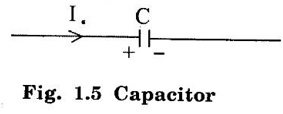
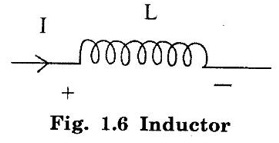
TYPES OF CIRCUIT ELEMENTS Circuit element can be classified in many aspects. An element which receives energy (or absorbs energy) is called a passive element. They dissipate (in the form of heat) or store energy in an electric and magnetic field. Examples; resistor, inductor, capacitor, etc. An element that supplies energy to the circuit is called an active element. Examples of active elements include voltage and current sources, generators, and electronic devices that require power supplies. An element which conducts current in both directions is called a bilateral element. Example resistor, inductor and capacitor. An element or a device in which current conduction is possible only in one direction is called unilateral element. Example: diode. There are three passive circuit elements. They are (a) Resistor, (b) Capacitor, (c) Inductor. (1) Resistance Electric resistance is the property of a material by which it opposes the flow of current. Energy is dissipated across a resistor in the form of heat. Resistance is denoted by R and the and the unit of resistance is ohm (Ω). The resistance of a conductor ● is directly proportional to its length li.e., R ∝ 1 ● is inversely proportional to area of cross section i.e., R ∝ l / a ● depends on the nature of conductor. ● Depends on temperature, From these, R ∝ ρl / a where, ρ is a constant and is called resistivity or specific resistance. Its value depends on the nature of the material. Its unit is ohm-m. Specific resistance may be defined as the resistance offered by unit cube of the material between its opposite faces. ρ ∝ Rl / a (2) Capacitance Capacitance is a measure of the amount of electric charge stored (or separated) for a given electric potential. The most common form of charge storage device is a two-plate capacitor. Capacitor: A capacitor is an electrical device that can store energy in the electric field between a pair of closely-spaced conductors. When current is applied to the capacitor, electric charges of equal magnitude, but opposite polarity, build up on each conductor. Capacitors are occasionally referred to as condensers. (3) Inductance Inductance is the property by virtue of which a circuit opposes the changes in the value of a time-varying current flowing through it. Inductance causes opposition only to varying currents and does not cause any opposition to steady or direct current. Inductor is the element in which energy is stored in the form of electromagnetic field. Loop (or) Mesh : A loop or mesh denote a closed path obtained by starting at a node and returning back to the same node through a set of connected circuit elements without passing through any intermediate node more than once. Node : A node is a point in a circuit where two or more circuit elements join. A node is said to be an essential node if it joins three or more elements. Branch: A branch is a path that connects two nodes. Those paths that connect essential nodes without passing through an essential node are known as essential branches.Passive element
Active element
Bilateral element
Unilateral element
1. Passive circuit elements

2. Network elements
Basic Electrical and Electronics Engineering: Unit I: Electrical Circuits : Tag: : - Types of Circuit Elements
Basic Electrical and Electronics Engineering: Unit I: Electrical Circuits
Under Subject
Basic Electrical and Electronics Engineering
BE3251 2nd semester Mechanical Dept | 2021 Regulation | 2nd Semester Mechanical Dept 2021 Regulation
Basic Electrical and Electronics Engineering
BE3251 2nd Semester CSE Dept 2021 | Regulation | 2nd Semester CSE Dept 2021 Regulation
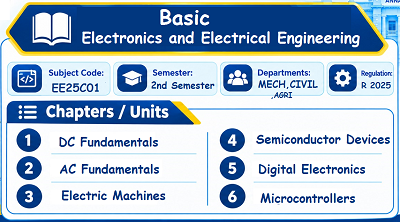
Basic Electrical and Electronics Engineering
EE25C01 2nd Semester | 2025 Regulation | 2nd Semester 2025 Regulation
Related Subjects
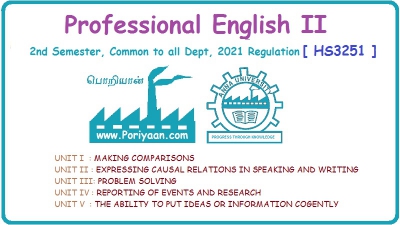
Professional English II
HS3251 2nd Semester 2021 Regulation | 2nd Semester Common to all Dept 2021 Regulation
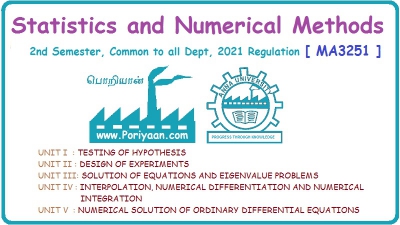
Statistics and Numerical Methods
MA3251 2nd Semester 2021 Regulation M2 Engineering Mathematics 2 | 2nd Semester Common to all Dept 2021 Regulation
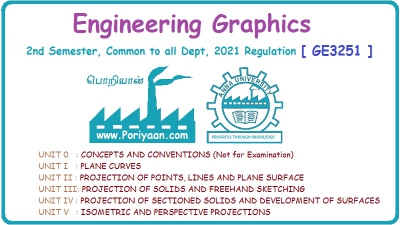
Engineering Graphics
GE3251 eg 2nd semester | 2021 Regulation | 2nd Semester Common to all Dept 2021 Regulation
Physics for Electrical Engineering
PH3202 2nd Semester 2021 Regulation | 2nd Semester EEE Dept 2021 Regulation
Basic Civil and Mechanical Engineering
BE3255 2nd Semester 2021 Regulation | 2nd Semester EEE Dept 2021 Regulation
Electric Circuit Analysis
EE3251 2nd Semester 2021 Regulation | 2nd Semester EEE Dept 2021 Regulation
Physics for Electronics Engineering
PH3254 - Physics II - 2nd Semester - ECE Department - 2021 Regulation | 2nd Semester ECE Dept 2021 Regulation
Electrical and Instrumentation Engineering
BE3254 - 2nd Semester - ECE Dept - 2021 Regulation | 2nd Semester ECE Dept 2021 Regulation
Circuit Analysis
EC3251 - 2nd Semester - ECE Dept - 2021 Regulation | 2nd Semester ECE Dept 2021 Regulation
Materials Science
PH3251 2nd semester Mechanical Dept | 2021 Regulation | 2nd Semester Mechanical Dept 2021 Regulation
Basic Electrical and Electronics Engineering
BE3251 2nd semester Mechanical Dept | 2021 Regulation | 2nd Semester Mechanical Dept 2021 Regulation
Physics for Civil Engineering
PH3201 2021 Regulation | 2nd Semester Civil Dept 2021 Regulation
Basic Electrical, Electronics and Instrumentation Engineering
BE3252 2021 Regulation | 2nd Semester Civil Dept 2021 Regulation
Physics for Information Science
PH3256 2nd Semester CSE Dept | 2021 Regulation | 2nd Semester CSE Dept 2021 Regulation
Basic Electrical and Electronics Engineering
BE3251 2nd Semester CSE Dept 2021 | Regulation | 2nd Semester CSE Dept 2021 Regulation
Programming in C
CS3251 2nd Semester CSE Dept 2021 | Regulation | 2nd Semester CSE Dept 2021 Regulation